New Year's Day morning
The New Year Autopsies
[Kay Scarpetta](entity:character-recall-character-kay-scarpetta-885d1633d21c) starts the year in a crowded [Boston](entity:location-recall-location-ccccb9ca0ba9) morgue, overseeing several autopsies while [Jack Fielding](entity:character-recall-character-jack-fielding-a0230f7762da) erupts over a murdered student and a suicide victim. [Benton Wesley](entity:character-recall-character-benton-wesley-66aa35d8b05b) calls from [Bellevue Hospital](entity:organization-recall-organization-bellevue-hospita-8869d503c11d) Medical Center with an urgent request: [Oscar Bane](entity:character-recall-character-oscar-bane-c9ea1de8b277), an uncharged patient connected to a
New Year's Day morning
The Hidden Online Attack
[Bryce](entity:character-recall-character-bryce-5a8f58e13569) tells Scarpetta that [Gotham Gotcha](entity:organization-recall-organization-gotham-gotcha-90fc836734ab) has published a vicious column about her, including a disturbing photograph taken in a morgue. The attack exposes intimate facts about her childhood and sexual history, and Benton privately realizes that the public revelation of [Pete Marino](entity:character-recall-character-pete-marino-9e9d72c32a46)'s assault has reopened the trauma between them.
New Year's Day morning
Benton’s Buried Anger
In therapy, [Dr. Thomas](entity:character-recall-character-dr-thomas-b9ed351306b5) forces Benton to confront his rage at Marino, his guilt over failing to protect Scarpetta, and the resentment he directs toward his wife. His professional habit of controlling and analyzing crises has kept him from grieving emotionally, but the public exposure of Marino’s conduct makes avoidance impossible.
New Year's Day afternoon
Scarpetta’s Journey to Bellevue
Scarpeta flies from [Boston](entity:location-recall-location-ccccb9ca0ba9) to New York with homemade food and forensic equipment. A taxi mistakenly leaves her at the [former Bellevue psychiatric hospital](entity:location-recall-location-f3dd6e435860), forcing her to walk through the cold with her luggage before reaching [Bellevue Hospital](entity:organization-recall-organization-bellevue-hospita-8869d503c11d) Medical Center
New Year's Day late afternoon
The First View of Oscar
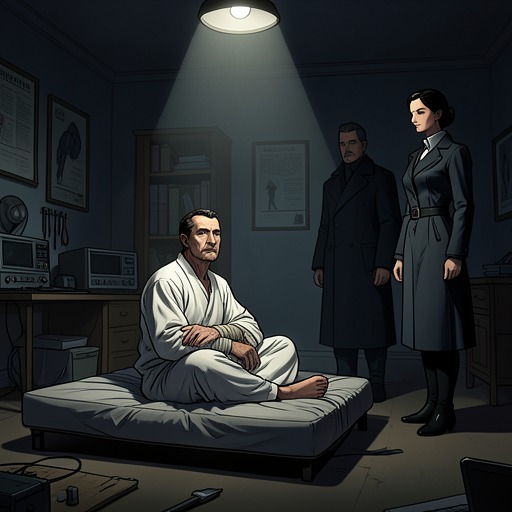
Scarpetta examines [Oscar Bane](entity:character-recall-character-oscar-bane-c9ea1de8b277), a highly muscular man with achondroplasia and mismatched eyes. He signs consent for biological samples but insists that she, rather than local physicians, examine him, invoking both informed consent principle and the boundaries of medical confidentiality
New Year's Day evening
Oscar’s Persecution Story
Oscar claims that a secret group has stolen his identity and is controlling his mind with electronic weapons. He says he warned [Jaime Berger](entity:character-recall-character-jaime-berger-1504e4d84412) that [Terri Bridges](entity:character-recall-character-terri-bridges-2d74ab325c1d) was in danger, but she ignored him, and he begs Scarpetta to protect him while refusing to identify the alleged persecutors.
New Year's Day evening
The Murder Across the Street
[Pete Marino](entity:character-recall-character-pete-marino-9e9d72c32a46) interviews [Shrew](entity:character-recall-character-shrew-6baf41c9f235), [Terri Bridges](entity:character-recall-character-terri-bridges-2d74ab325c1d)’s neighbor, about the previous night's events. Shrew reveals that Terri gave her a dying puppy, behaved unusually, and had a small blond boyfriend who drove past repeatedly, but she withholds her connection to [Gotham Gotcha](entity:organization-recall-organization-gotham-gotcha-90fc836734ab).
New Year's Day evening
Shrew’s Witness Account
Under Marino’s questioning, [Shrew](entity:character-recall-character-shrew-6baf41c9f235) reconstructs the visit in which Terri brought her the puppy Ivy while wearing gloves and no coat. Marino recognizes that Terri likely exploited Shrew’s compassion to dispose of a sick animal, and that the episode may reveal how Terri manipulated people around her.
New Year's Day evening
The Bellevue Examination
Scarpetta documents scratches and bruises on Oscar’s body while he describes an invisible attacker who supposedly assaulted him in Terri’s apartment. His claims contain too much detail, and his injuries appear suspiciously self-inflicted, but he continues to insist that he is a victim rather than a killer.
New Year's Day evening
The Golden-Anklet Pattern
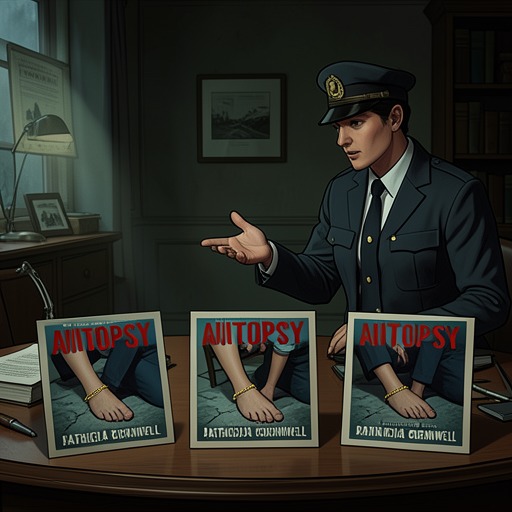
Morales tells Marino that Terri resembles two unresolved 2003 murders in [Baltimore](entity:location-recall-location-fffe9b5e5046) and Greenwich: all three victims were bound, strangled, and found wearing thin gold anklets on the left ankle. The discovery suggests a serial killer’s signature and turns Terri’s death into a possible nationwide pattern.
New Year's Day evening
The Anonymous Administrator
[Shrew](entity:character-recall-character-shrew-6baf41c9f235) reflects on her secret job administering [Gotham Gotcha](entity:organization-recall-organization-gotham-gotcha-90fc836734ab), an operation whose anonymous employer sends her columns to edit and publish. She begins to fear that the site may be connected to terrorism or organized crime, especially after receiving a second unusually personal column targeting Scarpetta.
New Year's Day evening
Morales Questions Shrew
Marino’s interview makes [Shrew](entity:character-recall-character-shrew-6baf41c9f235) realize that the detective may be the same [Pete Marino](entity:character-recall-character-pete-marino-9e9d72c32a46) vilified by [Gotham Gotcha](entity:organization-recall-organization-gotham-gotcha-90fc836734ab). Terrified that he could be a violent sexual predator, she becomes increasingly incoherent while warning him that Scarpetta may be endangered by terrorists.
New Year's Day evening
The Marilyn Monroe Revelation
[Shrew](entity:character-recall-character-shrew-6baf41c9f235) receives an alleged autopsy photograph of Marilyn Monroe and writes an unauthorized column claiming Monroe was murdered rather than suicidal. Her post immediately attracts hundreds of thousands of viewers, but the website begins behaving impossibly, with its graphics mutating into a grotesque looping display.
New Year's Day night
The Website Crash
A technician explains that a malicious worm or Trojan-like program has overwhelmed [Gotham Gotcha](entity:organization-recall-organization-gotham-gotcha-90fc836734ab)’s servers through the Marilyn Monroe image. [Shrew](entity:character-recall-character-shrew-6baf41c9f235) fears she will lose her job and believes the sabotage may be the work of government agents, terrorists, or the people behind the website.
New Year's Day night
The First Forensic Dispute
Berger and Benton review Terri’s confusing DNA results. The vaginal samples contain a mixture of profiles, including DNA matching an elderly Palm Beach woman who could not plausibly have participated in the murder, suggesting contamination or a common substance rather than a straightforward biological trace.
New Year's Day night
The Missing Digital Trail
Berger learns that Terri’s laptops were hidden in packed luggage and that the police have not yet examined their contents. She brings in [Lucy Farinelli](entity:character-recall-character-lucy-farinelli-0750c8f43c49), despite the danger created by Lucy’s past hostility toward Marino and her close family connection to Scarpetta.
New Year's Day night
Lucy and Berger Reconnect
Lucy arrives at Berger's office to examine [Terri Bridges' laptop](entity:object-recall-object-terri-bridges-73ea68dbcc9e) and immediately asserts control over the forensic process. Berger tells her that Marino now works for the New York County prosecutor's team, forcing Lucy to confront the possibility that their investigation will repeatedly bring her into contact with him
New Year's Day night
The Recovered Thesis
Lucy's neural network forensic system reconstructs fragments of Terri's master's thesis, which repeatedly cites Scarpetta and contains fabricated interviews in Scarpetta's voice. The work grows increasingly hostile and obsessive, implying that Terri's research was also an elaborate psychological attack
July 2, 2007
The Letter to Berger
A recovered email shows Terri asking [Jaime Berger](entity:character-recall-character-jaime-berger-1504e4d84412) to help her contact Scarpetta for a thesis interview. The message never reached Berger, probably because Scarpetta’s office was disrupted by [Rose](entity:character-recall-character-rose-154df6dd1d30)’s terminal illness and Marino’s disappearance, leaving Terri’s attempt at contact unanswered.
New Year's Day night
The First Kiss
After discussing their own damaged relationships and the ethical danger of their collaboration, Berger kisses Lucy at the loft door. Their attraction becomes an explicit relationship, even as the murder investigation reveals that Lucy’s personal connection to Scarpetta may compromise her role.
New Year's Day late night
Scarpetta Reconstructs the Strangling
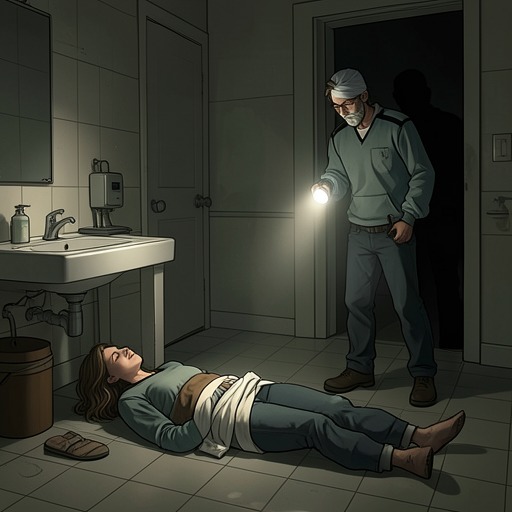
At the morgue, Scarpetta examines Terri’s body and determines that the strangulation was repeated, controlled, and sadistic rather than accidental. The pattern on Terri’s neck suggests that the killer pulled a smooth band upward and backward several times, allowing her to regain consciousness before strangling her again.
New Year's Day late night
The Chair Theory
Scarpetta finds wood splinters in Terri’s knees and feet and links them to the underside of the heart-shaped chair in her bathroom. She concludes that Terri was forced to sit before the mirror while the killer strangled her, a reconstruction that makes Oscar’s alleged physical role increasingly implausible.
New Year's Day late night
The Height Contradiction
Using ropes to compare the heights of Terri, Oscar, and a standing attacker, Scarpetta demonstrates that Oscar could not have generated the upward force needed to strangle Terri from behind while she sat. The physical geometry undermines the police theory that Oscar killed her.
New Year's Day night
The Hidden Email Identity
Lucy recovers Terri’s deleted correspondence with the account scarpetta612. The messages impersonate Scarpetta and persuade Terri that her idol is communicating with her, explaining both the thesis citations and Terri’s later hatred toward Scarpetta.
New Year's Day night
The Impossible Draft
A cruel email written in Scarpetta’s name is saved but never sent after Terri’s death. It insults Terri’s dwarfism and tells her that she could never practice forensic psychology, proving that someone is deliberately constructing evidence to make Scarpetta appear vicious and to torment the investigators.
New Year's Day late night
The Missing Book
Scarpetta searches Oscar’s library for [The Experiences of an Asylum Doctor](entity:object-recall-object-the-experiences-of-an-8544f99241ab), the book in which he claimed to have hidden a CD documenting his persecution. The book is absent, and Benton identifies Oscar’s citation as a deliberate falsehood or test, deepening uncertainty about whether Oscar is deluded, manipulative, or both.
New Year's Day night
The Death of Eva Peebles
At [Eva Peebles](entity:character-recall-character-eva-peebles-734619519913)’s apartment, Scarpetta finds the elderly neighbor hanging naked from a cord, with her limbs bound by transparent nylon ties. A gold anklet matches Terri’s, and the staged scene strongly suggests that the same sadistic killer has struck again.
New Year's Day night
The Murder Scene Pattern
Scarpetta determines that Eva was deliberately kept alive while being bound, stripped, and suspended, and that the killer left lamps and an open window to create a theatrical display. The similarities to Terri’s death include the bindings, removed clothing, anklet, and controlled strangulation.
New Year's Day night
The Discovery of Loudin’s Store
[Shrew](entity:character-recall-character-shrew-6baf41c9f235) visits Hartendiefjes Animal Store, believing she needs a dog for protection. She descends into the filthy basement and sees sick animals, medical equipment, and bodies in a freezer, where [Jake Loudin](entity:character-recall-character-jake-loudin-5fc30bc6dd39) and an accomplice confront her and offer her a free puppy to keep her silent
New Year's Day night
Shrew Calls the Police
After escaping the pet store, [Shrew](entity:character-recall-character-shrew-6baf41c9f235) calls the emergency number and reports Loudin’s operation, though alcohol and terror make her account incoherent. Her discovery connects the animal-abuse network to the murder investigation and gives Berger a possible route to the person who supplied Morales with victims.
New Year's Day night
Morales’s Secret Surveillance
Lucy discovers that Morales's roof camera has been on the building roof for weeks, secretly transmitting motion-triggered emails. Its access code matches the scarpetta612 account, proving that Morales—not Terri—has been impersonating Scarpetta and manipulating the digital evidence
New Year's Day night
The GPS Persecution
Lucy links Morales to the GPS routes sent to Oscar, which created the impression that Oscar was being followed and electronically persecuted. Morales had implanted a GPS chip in Oscar during a medical procedure disguised as treatment, turning Oscar's genuine paranoia into a weapon against him
New Year's Day night
The Murder Video
Lucy recovers Morales’s video of Terri’s murder from his private email account. The recording shows a masked, gloved man repeatedly strangling Terri on the heart-shaped chair, sexually assaulting her, and taking her underwear as a trophy while she begs him to stop.
New Year's Day night
Morales’s True Motive
The video reveals that Terri had discovered Morales’s manipulation of Oscar and had tried to expose him. Morales blames her for telling Oscar about the emails and GPS routes, then kills her as punishment and to protect his secrets.
New Year's Day night
The Serial Killer Exposure
Berger and Lucy connect Morales to the earlier murders of Bethany and Rodrick, whose bodies also carried the gold anklet and showed the same sexualized binding and contamination pattern. Morales had used his medical and veterinary access to obtain Aqualine and to create misleading DNA mixtures.
January 2 morning
Morales Takes the Penthouse
Morales enters Berger’s penthouse while Scarpetta is alone at the door and takes Scarpetta and Berger hostage. He binds their wrists with transparent nylon ties, brings equipment for filming and staging evidence, and prepares to turn the investigation into another private spectacle.
January 2 morning
Lucy Is Shot
Lucy emerges from the shower and encounters Morales, who shoots her in the back of the head. The bullet causes a terrifying but survivable scalp wound, leaving Lucy crawling through the apartment while Morales returns downstairs to threaten the hostages.
January 2 morning
Marino’s Armed Rescue
Marino arrives at the penthouse, sees Morales holding Scarpetta at gunpoint, and enters a deadly standoff. He initially prepares to surrender, but Lucy’s laser sight appears on Morales’s temple, creating the brief opening needed to reverse the hostage situation.
January 2 morning
Lucy Kills Morales
Lucy shoots [Mike Morales](entity:character-recall-character-mike-morales-503623adeb32) from the gallery, killing him before he can execute Scarpetta, Berger, or Marino. Scarpetta treats Lucy’s bleeding head wound, while Marino and Berger falsify the scene to protect Lucy from illegal-weapons charges and preserve the truth of the rescue.
January 2 morning
Oscar Becomes a Fugitive
Because Morales planted Oscar’s shoe and fingerprint evidence at Eva’s apartment, an arrest warrant is issued for Oscar. The media labels him a monster, and he flees rather than surrender to a police system he believes has already been captured by his persecutors.
January 2 afternoon
Oscar Calls the FBI
Benton appears on television to urge Oscar to contact the [Federal Bureau of Investigation](entity:organization-recall-organization-federal-bureau-o-f1c5664278d2) rather than local police. The public appeal is ethically risky but intended to keep Oscar from falling into Morales’s corrupt network or being killed by other officers hunting him.
January 2 evening
Oscar’s GPS Chip Removed
Oscar eventually contacts the [Federal Bureau of Investigation](entity:organization-recall-organization-federal-bureau-o-f1c5664278d2) and is placed in the protected psychiatric unit of [McLean Hospital](entity:location-recall-location-07bde0759878). Doctors remove a GPS implant chip from his left buttock, confirming that his persecution claims were based on a real assault even though his delusional interpretation had expanded far beyond it
After Morales’s death
The Crash of Gotham Gotcha
Lucy’s digital intrusion and the Marilyn Monroe malware attack leave [Gotham Gotcha](entity:organization-recall-organization-gotham-gotcha-90fc836734ab) unusable. The site’s collapse cuts off the anonymous columns and exposes how Terri had scheduled the two New Year’s pieces for automatic publication after her death.
After the murders are solved
Terri’s Final Moral Act
Investigators conclude that Terri wrote the defamatory [Gotham Gotcha](entity:organization-recall-organization-gotham-gotcha-90fc836734ab) columns and arranged their automatic release, then deleted the emails that tied her to the false Scarpetta correspondence. Her act was both revenge against the woman she believed had humiliated her and an attempt to erase evidence of her own anonymous crime.
January 13
The Reconciliation Dinner
At [Elaine's](entity:location-recall-location-e863886de8e3), Scarpetta, Benton, Berger, Lucy, Marino, and [Georgia Bacardi](entity:character-recall-character-georgia-bacardi-3a38f41e4c1e) gather after the crisis. Scarpetta gives Benton a letter for Oscar describing Terri’s good intentions, her difficult family history, and her bequest to the [Little People of America](entity:organization-recall-organization-little-people-of-05189fadbaf2), transforming the case from a portrait of monstrosity into one of wounded, complicated humanity.
January 13 evening
A New Circle of Trust
The survivors settle into an uneasy but genuine fellowship. Marino begins rebuilding a sober life, Lucy and Berger acknowledge their relationship, and Scarpetta and Benton choose continued honesty over secrecy, while Terri’s death remains a warning about humiliation, manipulation, and the consequences of refusing to confront pain.